In a recent article with the same title, futurist Glen Hiemstra argues that in the next ten years, offices will not change significantly. He goes on to say that most likely, offices will become far more internally mobile as workers continue to shift from desktop computers to laptops and tablets.
I do not entirely disagree. I think Hiemstra is committing a common error of most futurists which is known as Today But Moreso. In short, predictions typically will look identical to the current environment, but will exaggerate one element to make it appear futuristic. In his case, he's adding more mobility within the office.
As I said, I don't disagree. This will happen, because it is already happening. More and more of my customers are abandoning traditional desktop computers in favor of mobile computing platforms for their personnel. This shift has enabled greater mobility within the work space, as employees gather in ad hoc working groups which regularly adapt to needs of the moment. Cross functional teams, once a hard fought goal of forward thinking corporate managers, have become commonplace as personnel find the resources to solve the problems with minimal management interference.
Where Hiemstra falls short is his failure to include a variety of technologies which will begin to impact the corporate enterprise within the next few years, by which I mean robotics, machine learning, and all the rest of those automatons that will change how we work and live. How will simple, cheap delivery bots change the office environment? How will AI enhance the power of cross functional teams?
Those are the questions a futurist should examine. Luckily, I am not a futurist so I just get to pose the questions, without giving answers. Well, at least not giving them away for free online.
To learn more about how the future will impact your business, contact me today.
R-Squared Computing | Lou RG | Nearly Free IT | Firm Wisdom
Subscribe for free insights: RSS | Email
Showing posts with label Technology. Show all posts
Thursday, March 23, 2017
Monday, February 27, 2017
Don't Blame the Tool
A few months ago, I discussed Kranzberg's Laws of Technology which got me thinking more on the First Law:
First, let's change the word "technology" to "tools." I find that it is helpful since, to paraphrase Alan Kay, people think is technology anything invented after they were born. That's a very limited viewpoint for such a broad subject. Ergo, Tools are neither good nor bad; nor are they neutral.
At the heart of this argument is the assertion that tools have no morality, they are neither good nor bad, but it certainly has a purpose (not neutral).
The purpose of any tool must always be examined when devising any rules around it's application. You can use a defibrillator to save a life or to kill. You can use a gun to hunt or to murder. The tool itself is free of morality. However, some tools have no purpose other than to propagate immorality. A computer virus is a great example. It is an tool that only has immoral use, regardless if the target is my mother's computer or Iranian centrifuges.
R-Squared Computing | Lou RG | Nearly Free IT | Firm Wisdom
Subscribe for free insights: RSS | Email
Technology is neither good nor bad; nor is it neutral.It's a fascinating statement and worth deeper discussion.
First, let's change the word "technology" to "tools." I find that it is helpful since, to paraphrase Alan Kay, people think is technology anything invented after they were born. That's a very limited viewpoint for such a broad subject. Ergo, Tools are neither good nor bad; nor are they neutral.
At the heart of this argument is the assertion that tools have no morality, they are neither good nor bad, but it certainly has a purpose (not neutral).
The purpose of any tool must always be examined when devising any rules around it's application. You can use a defibrillator to save a life or to kill. You can use a gun to hunt or to murder. The tool itself is free of morality. However, some tools have no purpose other than to propagate immorality. A computer virus is a great example. It is an tool that only has immoral use, regardless if the target is my mother's computer or Iranian centrifuges.
Because a tool is misused isn't enough cause to abandon the tool. Just because a computer virus is only used for immoral purposes, the virtuous side is that it has created a whole industry for digital security and has forced software developers to write better, more secure code. Can you imagine throwing away all the computers because you got a virus once?
When you examine a new tool for your business, keep all of Kranzberg's Laws in mind, but especially the First Law. You need to fully appreciate how this tool will impact your business and why.
R-Squared Computing | Lou RG | Nearly Free IT | Firm Wisdom
Subscribe for free insights: RSS | Email
Wednesday, December 7, 2016
Kranzberg's Laws of Technology
Melvin Kranzberg (1917-1995) was a really smart guy. He earned his PhD from Harvard and was a professor at Georgia Tech. He also served in George Patton's army during World War II, so he had to be tough too. I respect smart, tough people so I pay attention to their ideas. He studied how technology and culture shape each other, which led him to some impressive insights.
Kranzberg is best known for his six Laws of Technology which state:
In any conversation about the development of a new technology, keep a copy of these rules nearby. Whenever I meet with entrepreneurs who want to enlist me in their new tech business venture, I always pull up a copy of Kranzberg's Laws. It helps me to frame the potential of the invention, and to look for the unintended consequences. I try to see beyond the immediate profit potential of the idea, and look to how culture and technology will interact to propel, or hinder, the business idea. It is surprisingly useful.
Click for a deeper analysis of Krazberg's Laws.
R-Squared Computing | Lou RG | Nearly Free IT | Firm Wisdom
Subscribe for free insights: RSS | Email
Kranzberg is best known for his six Laws of Technology which state:
At the heart of Kranzberg's laws is the simple understanding that humans are tool making animals. It understands that there is a coevolution between human kind and the tools we build.
- Technology is neither good nor bad; nor is it neutral.
- Invention is the mother of necessity.
- Technology comes in packages, big and small.
- Although technology might be a prime element in many public issues, nontechnical factors take precedence in technology-policy decisions.
- All history is relevant, but the history of technology is the most relevant.
- Technology is a very human activity - and so is the history of technology.
In any conversation about the development of a new technology, keep a copy of these rules nearby. Whenever I meet with entrepreneurs who want to enlist me in their new tech business venture, I always pull up a copy of Kranzberg's Laws. It helps me to frame the potential of the invention, and to look for the unintended consequences. I try to see beyond the immediate profit potential of the idea, and look to how culture and technology will interact to propel, or hinder, the business idea. It is surprisingly useful.
Click for a deeper analysis of Krazberg's Laws.
R-Squared Computing | Lou RG | Nearly Free IT | Firm Wisdom
Subscribe for free insights: RSS | Email
Monday, January 19, 2015
How Technology Changes Us
One million years ago, the earliest humans napped stones to make hand axes. These axes made our ancestors much more effective meat eaters. It also increased caloric intake which allowed us to develop larger brains. Oddly enough, new research shows a connection between the parts of the brain involved in napping stones and the speech centers of the brain. It could be the simple act of banging rocks together (with incredible patience and precision!) is responsible for human speech.
Forty thousand years ago, humans started creating art. All over the world, Ice Age humans painted representations of animals and hunters on cave walls. Art was the moment where our species realized we could create representations of things that exist in the real world. We could capture a moment in time by using pictures. This small step opens the door to writing and math. The fact you are reading this is proof that those were significant advances.
Ten thousand years ago, our ancestors figured out farming and animal husbandry. This let them abandon their previous nomadic existence and let them settle down. This gave them more reliable sources of calories and, for the first time in history, created times of surplus. This freed up some of the society to specialize in tasks that would be useful. This change led to population growth which led to towns. Over time, towns grew into cities, and formal governments were born. This led to organized societies better able to manage resources and protect the citizenry. Which led to stability, which encouraged commerce, which increased wealth. You get the idea.
But the Agricultural Revolution had negative physical effects on our Neolithic ancestors. Because human diet and lifestyle changed, we know from archeological evidence that human height actually declined. When people started living off the land, they shrunk. To add insult to injury, it also shortened their lifespans too. Hunter-gatherers could live into their 30's, while Neolithic folks rarely made it to 20.
This is clear evidence of how our technologies change us. In the early stages, they cause us physical harm. It makes us shorter, dumber and we die younger; but only for a short span of evolutionary time! By the time of Ancient Rome, if you survived childhood, you had a fair chance of living into your 40's. The negatives were eventually overcome through a combination of new technologies (plumbing, hygiene, diverse diet) and human adaptation. In some ways the discovery of agriculture was a step backwards that allowed us to take several more steps forward.
The Digital Age is reshaping what it means to be human. Right now we are in the process of re-inventing humanity for this new technological age. As the discoveries of the Digital Age roll out in all their splendor, our species is being reshaped by new environmental pressures which will select for certain attributes. We will adapt, mentally and physically, to the new digital environments we craft. At first, it will have negative effects but, given time, those negatives will be surpassed. As a species, we will have to take a step backwards so we can leap into the future.
Want to know more about the leap into the future? R-Squared Computing can help you prepare for tomorrow. 305-423-9574
R-Squared Computing | Lou RG | Nearly Free IT | Firm Wisdom
Subscribe for free insights: RSS | Email
Wednesday, September 17, 2014
Nanomaterials & Manufacturing
A nanometer is one millionth of a millimeter. Once we enter the nano scale, we are dealing with a very tiny world. This is a world that cannot be seen with the naked eye, or even a regular laboratory microscope.
Once we engineer a material to the nanoscale, they start to take on strange properties which ultimately determine the value of those materials. Nanomaterials are being used today to make medicines more effective, make concrete stronger, and to assist with toxic waste cleanup.
Nanoscale materials can be absorbed by human beings either through ingestion, breathing and even through the skin. This poses some serious health risks from nanomaterials as we learn how they impact the human body over time. Even benevolent medicines can become poisonous in high enough doses.
The ultimate nanomaterial is graphene. This material has near unlimited applications in every aspect of business life. Every few days, scientists publish a new discovery based on graphene and its derivatives. Currently, graphene is insanely expensive but the price is coming down quickly as new manufacturing methods are developed. However, graphene will still need to drop a full order of magnitude before it can be economical for consumer applications.
Once graphene breaks this price-performance barrier, we will see an explosion of new applications. Now I come to the bigger point of this post: once we can commercially 3d print at the nanoscale, the whole $10 trillion global manufacturing changes. That is the game changer which disrupts the entire industry.
When anyone, anywhere can 3d print a smartphone, why do we need cheap Chinese factories? This is a continuation of deep global trend of annually increasing production and declining manufacturing jobs. This is at the heart of the change away from the Industrial Economy to the Network Economy. Three hundred years ago, 90% of the global population worked in agriculture, today it is 3%. Soon we will see the same happen with manufacturing, with the concurrent collapse and consolidation of most of the businesses in the manufacturing industry.
During times of great change, it is smart to have forward thinkers as part of your team. You need intelligent people who can see how these changes will impact your business so you can survive the coming storm. Contact us today to get started. (305) 423-9574
R-Squared Computing | Lou RG | Nearly Free IT | Firm Wisdom
Subscribe for free insights: RSS | Email) -
Once we engineer a material to the nanoscale, they start to take on strange properties which ultimately determine the value of those materials. Nanomaterials are being used today to make medicines more effective, make concrete stronger, and to assist with toxic waste cleanup.
Nanoscale materials can be absorbed by human beings either through ingestion, breathing and even through the skin. This poses some serious health risks from nanomaterials as we learn how they impact the human body over time. Even benevolent medicines can become poisonous in high enough doses.
The ultimate nanomaterial is graphene. This material has near unlimited applications in every aspect of business life. Every few days, scientists publish a new discovery based on graphene and its derivatives. Currently, graphene is insanely expensive but the price is coming down quickly as new manufacturing methods are developed. However, graphene will still need to drop a full order of magnitude before it can be economical for consumer applications.
Once graphene breaks this price-performance barrier, we will see an explosion of new applications. Now I come to the bigger point of this post: once we can commercially 3d print at the nanoscale, the whole $10 trillion global manufacturing changes. That is the game changer which disrupts the entire industry.
When anyone, anywhere can 3d print a smartphone, why do we need cheap Chinese factories? This is a continuation of deep global trend of annually increasing production and declining manufacturing jobs. This is at the heart of the change away from the Industrial Economy to the Network Economy. Three hundred years ago, 90% of the global population worked in agriculture, today it is 3%. Soon we will see the same happen with manufacturing, with the concurrent collapse and consolidation of most of the businesses in the manufacturing industry.
During times of great change, it is smart to have forward thinkers as part of your team. You need intelligent people who can see how these changes will impact your business so you can survive the coming storm. Contact us today to get started. (305) 423-9574
R-Squared Computing | Lou RG | Nearly Free IT | Firm Wisdom
Subscribe for free insights: RSS | Email) -
Friday, August 8, 2014
Genetic Technology & You
Very soon we will be able to control our personal evolution by tinkering with our DNA. We will be able to make permanent changes or just short term tweaks within our lifetimes.
Short term gene therapies will be available for relatively minor cosmetic adjustments -- such as, blue hair and purple eyes for the weekend. Maybe add a slight cyan tint to your skin tone to better match that amazing new outfit. These therapies will work for a short time and then you'll revert back to your normal appearance. Much like the common cold, you might "catch" a case of green hair for a week then get over it.
Permanent DNA changes will help you be taller, stronger, more agile, better able to recover from injury and all around tougher. We will become resistant to diseases that have plagued us since the beginning of time, even helping us to overcome death itself. (See here.) We will become a race of super beings, capable of amazing new feats.
The truly scary part if this prediction is that I see it happening at homes, not in medical clinics. I believe that big pharma and universities will continue to advance DNA sciences, but the real innovation will happen in the wilds of the Creative Commons. I see home-based biohackers working in an open source community where they share DNA code snippets and techniques for harnessing viral delivery systems. I see small businesses selling unique, one-time-use digital biohack recipes so people can brew their DNA cocktails at home.
In this world, what happens to modern standards of beauty? When everyone has blue eyes and is supermodel thin yet healthier than any human alive today, what is considered beautiful? What about sports? The current concern over steroid doping will seem silly once genetically engineered humans routinely break records. The implications reel the imagination.
What do you think will be some of the unexpected consequence of human DNA tinkering?
R-Squared Computing | Lou RG | Nearly Free IT | Firm Wisdom
Subscribe for free insights: RSS | Email
Wednesday, August 6, 2014
Why I Love Materials Science
A reader and friend commented to me yesterday that I seem very interested in materials sciences. He wanted to know why so I took advantage of the question for today's blog topic.
First, let me state that the value of a material is determined by its properties. These properties determine where it can best be used. For example, my last post I discussed graphene which has excellent mechanical, electrical, thermal and optical properties (to name a few). Considering all these properties, it stands to reason, graphene will be very useful for electronic devices and in many other applications that require strength and flexibility. Keep that in mind and we'll come back to that in a bit.
I am fascinated with materials sciences because each major epoch of human advance has revolved around innovation in materials.
When early humans first dug copper from the earth and smelted it into weapons, this changed history. The early barbaric tribesmen who knew the secret of copper could more easily defeat their stone wielding enemies. Stone weapons would chip and shatter against copper swords and armor.
When we first mixed copper with tin to create bronze, once again, the tides of history turned and a new Age was born. This is the period in history that gives us the rise of Ancient Greece and the scribblings of brilliant philosophers which still guide our thinking today. The brave Greek hoplite of legend relied on armor and weapons of bronze.
Then onto the Iron Age where we learned to harness natural forces and bend machines to augment the power of man. This is the epoch that is now ending, which we call the Industrial Revolution. It is the final phase of the Iron Age. This was the Age of industrialization when mechanized armies clashed in two mighty global wars for supremacy of ideology and control the resources and wealth of the Great European Plain -- all fueled by iron and petroleum.
It is advances in materials science that allowed the transistor to shrink ever and ever smaller until billions fit on a single computer chip. As we learn how to better control and manipulate the elements of nature, we unleash new potentials for humanity. We are now in the beginning stages of the Information Age -- the first Age of human history that was not based on the mastery of a single chemical element.
We now live in an era where new materials are being developed at an incredible rate. It stands to reason we are learning more and more how to manipulate and control the very elements of nature to create new exotic materials. With each new exotic material, new properties align or are improved which thereby determines the value of those materials. Ergo, new materials mean new opportunities.
And that's why I care about materials science.
R-Squared Computing | Lou RG | Nearly Free IT | Firm Wisdom
Subscribe for free insights: RSS | Email
First, let me state that the value of a material is determined by its properties. These properties determine where it can best be used. For example, my last post I discussed graphene which has excellent mechanical, electrical, thermal and optical properties (to name a few). Considering all these properties, it stands to reason, graphene will be very useful for electronic devices and in many other applications that require strength and flexibility. Keep that in mind and we'll come back to that in a bit.
I am fascinated with materials sciences because each major epoch of human advance has revolved around innovation in materials.
When early humans first dug copper from the earth and smelted it into weapons, this changed history. The early barbaric tribesmen who knew the secret of copper could more easily defeat their stone wielding enemies. Stone weapons would chip and shatter against copper swords and armor.
When we first mixed copper with tin to create bronze, once again, the tides of history turned and a new Age was born. This is the period in history that gives us the rise of Ancient Greece and the scribblings of brilliant philosophers which still guide our thinking today. The brave Greek hoplite of legend relied on armor and weapons of bronze.
Then onto the Iron Age where we learned to harness natural forces and bend machines to augment the power of man. This is the epoch that is now ending, which we call the Industrial Revolution. It is the final phase of the Iron Age. This was the Age of industrialization when mechanized armies clashed in two mighty global wars for supremacy of ideology and control the resources and wealth of the Great European Plain -- all fueled by iron and petroleum.
It is advances in materials science that allowed the transistor to shrink ever and ever smaller until billions fit on a single computer chip. As we learn how to better control and manipulate the elements of nature, we unleash new potentials for humanity. We are now in the beginning stages of the Information Age -- the first Age of human history that was not based on the mastery of a single chemical element.
We now live in an era where new materials are being developed at an incredible rate. It stands to reason we are learning more and more how to manipulate and control the very elements of nature to create new exotic materials. With each new exotic material, new properties align or are improved which thereby determines the value of those materials. Ergo, new materials mean new opportunities.
And that's why I care about materials science.
R-Squared Computing | Lou RG | Nearly Free IT | Firm Wisdom
Subscribe for free insights: RSS | Email
Monday, August 4, 2014
Graphene - The Wonder Material of 21st Century
It turns out that if you take one atom of carbon and lay it next to another carbon atom, then you keep expanding that out into a sheet of carbon that is one atom thick, you create graphene. First isolated in 2004, graphene has rapidly absorbed enormous amounts of research dollars all over the globe.
For its weight, graphene is unbelievably strong -- as in 100 times stronger than steel. And it is a great conductor of electricity and heat. Plus it's flexible. It also reflects up to 97.7% of the light that shines on it, making it nearly transparent. The future of all electronic devices will be made of graphene.
Compared to silicon, graphene is still in its infancy. But the future looks bright for this young new material.
Because it is so transparent, it could have application as a display screen, no different than the LCD screen on your laptop. It also has fantastic properties as an energy storage medium with phenomenal power density. It has applications in water purification, solar panels, and medical sensor bio-technologies that can monitor vital signs and even sequence DNA. Scientists are frightfully close to even creating a graphene transistor.
If scientists can manage to crack all these amazing applications, then we have a wonder material that acts like it's own power charger, battery, circuit board, processor and display.
Look at your smartphone, or any other consumer electronic device. You will see that the case is made of plastic and the display is made of glass. The battery is made from lithium and the circuitry is made from silicon. There are 28 different elements involved in just one smartphone. Now imagine replacing all of those materials with one.
The immediate cost of the device drops drastically. Manufacturers don't have to source thousands of elements from different suppliers to produce the newest Samsung Galaxy. This eliminates costly supply chains, some of which originate in Afghanistan and other not-so-friendly parts of the globe. Did I mention that graphene is getting cheaper every day? Even if we can't replace all the elements with graphene, we can dramatically simplify. This means lower prices and greater performance.
I recommend you keep your eyes open for graphene investment opportunities. The future of this material is bright.
R-Squared Computing | Lou RG | Nearly Free IT | Firm Wisdom
Subscribe for free insights: RSS | Email
For its weight, graphene is unbelievably strong -- as in 100 times stronger than steel. And it is a great conductor of electricity and heat. Plus it's flexible. It also reflects up to 97.7% of the light that shines on it, making it nearly transparent. The future of all electronic devices will be made of graphene.
Compared to silicon, graphene is still in its infancy. But the future looks bright for this young new material.
Because it is so transparent, it could have application as a display screen, no different than the LCD screen on your laptop. It also has fantastic properties as an energy storage medium with phenomenal power density. It has applications in water purification, solar panels, and medical sensor bio-technologies that can monitor vital signs and even sequence DNA. Scientists are frightfully close to even creating a graphene transistor.
If scientists can manage to crack all these amazing applications, then we have a wonder material that acts like it's own power charger, battery, circuit board, processor and display.
Look at your smartphone, or any other consumer electronic device. You will see that the case is made of plastic and the display is made of glass. The battery is made from lithium and the circuitry is made from silicon. There are 28 different elements involved in just one smartphone. Now imagine replacing all of those materials with one.
The immediate cost of the device drops drastically. Manufacturers don't have to source thousands of elements from different suppliers to produce the newest Samsung Galaxy. This eliminates costly supply chains, some of which originate in Afghanistan and other not-so-friendly parts of the globe. Did I mention that graphene is getting cheaper every day? Even if we can't replace all the elements with graphene, we can dramatically simplify. This means lower prices and greater performance.
I recommend you keep your eyes open for graphene investment opportunities. The future of this material is bright.
R-Squared Computing | Lou RG | Nearly Free IT | Firm Wisdom
Subscribe for free insights: RSS | Email
Wednesday, July 30, 2014
The Ghost in the Machine? It's You.
I joined BHF for dinner before we performed server maintenance for one of our customers. We started talking about science fiction troupes. Once that line of discussion started, it was only a matter of time before we talked about The Ghost in the Machine -- we both agree we hate the term, but we are starting to see some of its fingerprints.
In science fiction, this troupe is all about a machine becoming self-aware and questioning whether it has a soul. Some of the greatest stories in scifi center around a self-aware computer that helps or destroys humanity. Naturally, we think it's complete nonsense.
Instead of scifi's emerging self-awareness, we believe it is more like a mass digital swarming Zeitgeist. With every tweet, comment, like, poke, friend request, review and data point we feed the ghost, it collects another piece of the human psyche. Slowly we are accumulating all the joy and hate, pain and pleasure, fear and hope of the human race into a digital format. The collective human psyche now has a mighty digital mirror.
Since all tech strives to become invisible and we are on a convergence course towards one another, soon we will merge with digital technology and make it part of ourselves. At that point, we are the machines. We become technology and it becomes us. The machine won't wake up -- we will.
In science fiction, this troupe is all about a machine becoming self-aware and questioning whether it has a soul. Some of the greatest stories in scifi center around a self-aware computer that helps or destroys humanity. Naturally, we think it's complete nonsense.
Instead of scifi's emerging self-awareness, we believe it is more like a mass digital swarming Zeitgeist. With every tweet, comment, like, poke, friend request, review and data point we feed the ghost, it collects another piece of the human psyche. Slowly we are accumulating all the joy and hate, pain and pleasure, fear and hope of the human race into a digital format. The collective human psyche now has a mighty digital mirror.
Since all tech strives to become invisible and we are on a convergence course towards one another, soon we will merge with digital technology and make it part of ourselves. At that point, we are the machines. We become technology and it becomes us. The machine won't wake up -- we will.
R-Squared Computing | Lou RG | Nearly Free IT | Firm Wisdom
Subscribe for free insights: RSS | Email
Monday, July 21, 2014
Homo Evolutis
Eventually humans will control evolution, not just through DNA tinkering but also by merging with our technology.
Tech-Philosopher Kevin Kelly postulates that as technology becomes ubiquitous, it disappears from sight. As digital computers shrink towards the nano scale, it is inevitable that humans will implant these as augmentations. Just last month, DARPA announced a program to develop a digital brain implant to help augment human memory as a treatment for various brain disorders.
In April of this year, scientists tested a new DNA-based nano robot that can release medications in highly targeted and controlled ways. Very soon, we will be able to eradicate cancer with targeted treatments which only attack cancerous cells. Current chemo-therapies will be remembered as nothing more than witch doctor medicine. How soon till we are all walking around with nanobots embedded in our bloodstream?
Science continues to push the boundaries of the human genome. Very soon, every baby born will have her genome sequenced as part of her medical file. Doctors will become truly proactive at protecting against genetic illnesses before they become a danger. Eventually, we will be able to genetically engineer out these weaknesses and improve the human animal. Imagine a world without hemophilia, autism or all the other genetic diseases. It can all happen once we can engineer the human genome.
This is a critical convergence point.
When we can tinker with our own DNA to make changes, and we can control that process via nanobots, we stop being Homo Sapiens and cross the threshold into Homo Evolutis. At that point we become the masters of our own evolution and the human animal will explode into a dizzying array of variations and permutations.
Suddenly, you can sport pink hair for that fancy dinner party and then change it back before work on Monday. You can tinker with your DNA to adjust your weight or even your height, within certain limits. Who knows? Maybe we could even geneer (gene + engineer) humans capable to withstanding hard vacuum or even those who can breathe CO2 instead of O2. The limits of current humanity end and a whole new human race begins.
R-Squared Computing | Lou RG | Nearly Free IT | Firm Wisdom
Subscribe for free insights: RSS | Email
Tech-Philosopher Kevin Kelly postulates that as technology becomes ubiquitous, it disappears from sight. As digital computers shrink towards the nano scale, it is inevitable that humans will implant these as augmentations. Just last month, DARPA announced a program to develop a digital brain implant to help augment human memory as a treatment for various brain disorders.
In April of this year, scientists tested a new DNA-based nano robot that can release medications in highly targeted and controlled ways. Very soon, we will be able to eradicate cancer with targeted treatments which only attack cancerous cells. Current chemo-therapies will be remembered as nothing more than witch doctor medicine. How soon till we are all walking around with nanobots embedded in our bloodstream?
Science continues to push the boundaries of the human genome. Very soon, every baby born will have her genome sequenced as part of her medical file. Doctors will become truly proactive at protecting against genetic illnesses before they become a danger. Eventually, we will be able to genetically engineer out these weaknesses and improve the human animal. Imagine a world without hemophilia, autism or all the other genetic diseases. It can all happen once we can engineer the human genome.
This is a critical convergence point.
When we can tinker with our own DNA to make changes, and we can control that process via nanobots, we stop being Homo Sapiens and cross the threshold into Homo Evolutis. At that point we become the masters of our own evolution and the human animal will explode into a dizzying array of variations and permutations.
Suddenly, you can sport pink hair for that fancy dinner party and then change it back before work on Monday. You can tinker with your DNA to adjust your weight or even your height, within certain limits. Who knows? Maybe we could even geneer (gene + engineer) humans capable to withstanding hard vacuum or even those who can breathe CO2 instead of O2. The limits of current humanity end and a whole new human race begins.
R-Squared Computing | Lou RG | Nearly Free IT | Firm Wisdom
Subscribe for free insights: RSS | Email
Friday, November 1, 2013
21st Century Foundational Technologies
Every Economic Age is built on a collection of foundational technologies. It stands to reason, if we can identify the foundational technologies of the 21st Century, we can define the scope and nature of the changes to come.
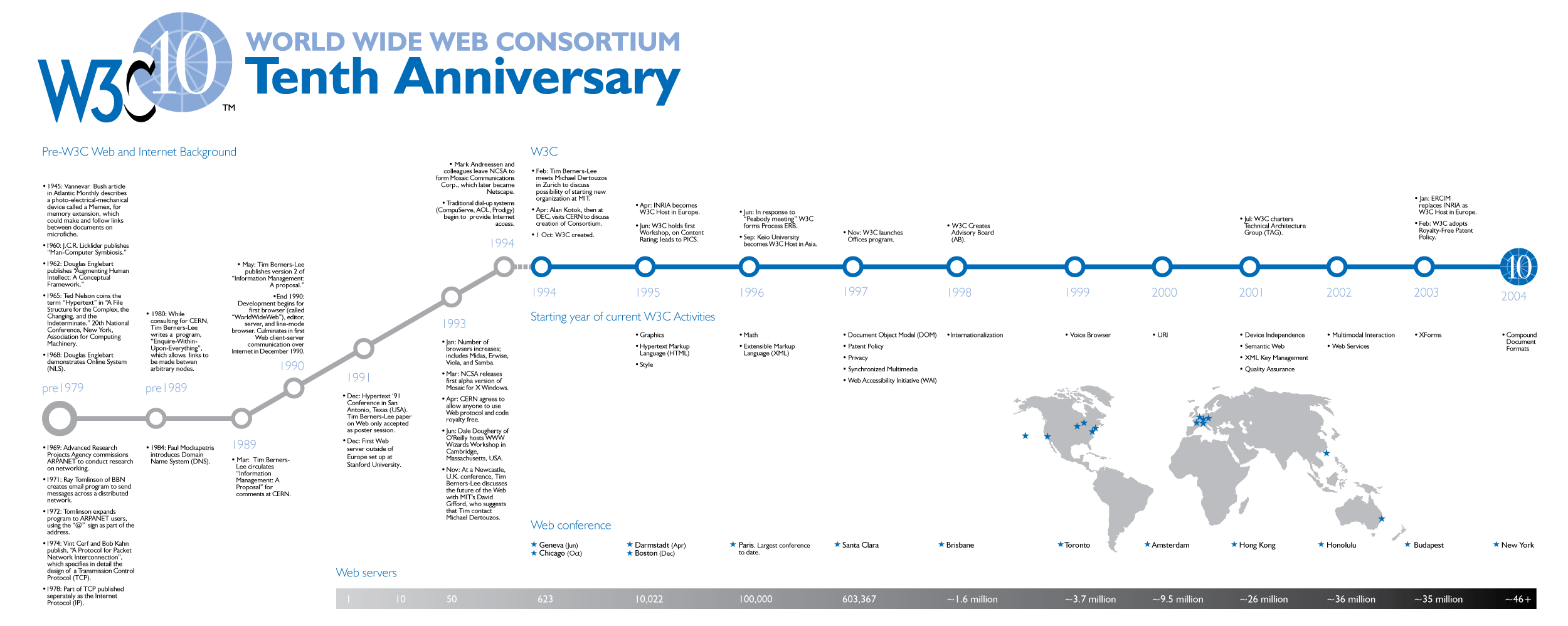
First and most obvious is the internet. This foundational technology was born near the middle of the 20th Century but it didn't really become commonly useful until 1992 with the advent of the World Wide Web. The technology we know as web pages made the internet accessible to the less technically oriented. By 1999, we entered into the era of Web 2.0 where anyone with an internet connection could suddenly post content to the internet without technical knowledge. This foundational technology has magnified our ability to share information. Whereas in 1820 it took 14 years for André-Marie Ampère to learn of the German experiment that inspired him to describe the measure of electrical current, today such knowledge is available almost instantaneously.
Another foundational technology will be 3d printing. Invented in 1984, the first 3d printers were used for rapid prototyping. Since then the technology has continued to blossom and grow as new designs and solutions are shared by a growing community of Makers. Inspired by the brilliant works they see every week on Discovery Channel's Mythbusters, regular people with passion have taught themselves and others how to build the devices and gear they need. These engineer/hackers are the driving force behind this foundational technology that will rewrite the rules for industry, warehousing and shipping. Imagine a world where anything you need can be manufactured either in your home or at a neighborhood facility that can deliver it to you within hours.
But there will be more. Artificial intelligence and robotics will give us the world envisioned by Isaac Asimov. Nanomaterials will piggy back on 3d printing and give birth to Star Trek-like replicator technologies that will eliminate the problems of scarcity. New developments in graphene materials will create super long lasting batteries that also function as the lightweight exteriors of our devices. Ubiquitous computing and the Internet of Things will cover the world with a blanket of data available for any number of inquiries. Medical and genetic technologies will ultimately turn our bodies into tinker toys that we can adjust and modify for life or just for the weekend. Humanity will merge with their machines and being to march towards eliminating the death of individual consciousness.
Over the next 20 years, the rules of humanity will be completely rewritten. How we work, live and play, how our societies function and even how our cultures act will all change. For some this is a terrifying prospect because it will bring terrible upheaval to our current economic status quo. Old industries will fall and new industries will be born in the undeniable cycle of creative destruction. Rest assured that new paradigms will prevail and stability will return once we learn to let go of the dying past and to face the winds of change, not with walls, but with windmills.
If you want to learn how your business can harness the winds of change, call R-Squared Computing for your free consultation. You can't afford to wait much longer. Call today (305) 423-9574.
R-Squared Computing | Lou RG | Nearly Free IT | Firm Wisdom
Subscribe for free insights: RSS | Email
First and most obvious is the internet. This foundational technology was born near the middle of the 20th Century but it didn't really become commonly useful until 1992 with the advent of the World Wide Web. The technology we know as web pages made the internet accessible to the less technically oriented. By 1999, we entered into the era of Web 2.0 where anyone with an internet connection could suddenly post content to the internet without technical knowledge. This foundational technology has magnified our ability to share information. Whereas in 1820 it took 14 years for André-Marie Ampère to learn of the German experiment that inspired him to describe the measure of electrical current, today such knowledge is available almost instantaneously.
Another foundational technology will be 3d printing. Invented in 1984, the first 3d printers were used for rapid prototyping. Since then the technology has continued to blossom and grow as new designs and solutions are shared by a growing community of Makers. Inspired by the brilliant works they see every week on Discovery Channel's Mythbusters, regular people with passion have taught themselves and others how to build the devices and gear they need. These engineer/hackers are the driving force behind this foundational technology that will rewrite the rules for industry, warehousing and shipping. Imagine a world where anything you need can be manufactured either in your home or at a neighborhood facility that can deliver it to you within hours.
But there will be more. Artificial intelligence and robotics will give us the world envisioned by Isaac Asimov. Nanomaterials will piggy back on 3d printing and give birth to Star Trek-like replicator technologies that will eliminate the problems of scarcity. New developments in graphene materials will create super long lasting batteries that also function as the lightweight exteriors of our devices. Ubiquitous computing and the Internet of Things will cover the world with a blanket of data available for any number of inquiries. Medical and genetic technologies will ultimately turn our bodies into tinker toys that we can adjust and modify for life or just for the weekend. Humanity will merge with their machines and being to march towards eliminating the death of individual consciousness.
Over the next 20 years, the rules of humanity will be completely rewritten. How we work, live and play, how our societies function and even how our cultures act will all change. For some this is a terrifying prospect because it will bring terrible upheaval to our current economic status quo. Old industries will fall and new industries will be born in the undeniable cycle of creative destruction. Rest assured that new paradigms will prevail and stability will return once we learn to let go of the dying past and to face the winds of change, not with walls, but with windmills.
If you want to learn how your business can harness the winds of change, call R-Squared Computing for your free consultation. You can't afford to wait much longer. Call today (305) 423-9574.
R-Squared Computing | Lou RG | Nearly Free IT | Firm Wisdom
Subscribe for free insights: RSS | Email
Thursday, October 10, 2013
Turing Tests: Why My Comments Are Now Disabled
Because of the growing number of spam comments posted on this blog, I am turning off comments. I apologize for the inconvenience.
It is amazing the ends that people will go to in an attempt to increase their search engine rankings. I am reasonably certain most of the spam comments I was seeing originated from web-based robots. I am impressed by the skill involved in programming a software robot that can crawl blogs to submit comments by defeating captchas.
A captcha is the annoying distorted text you have to type in on some web sites. It is basically a Turing test, or a way of distinguishing between a human and a robot in a blind interaction. It's impressive that computers are defeating these basic Turing tests. We are truly experiencing change at an unprecedented rate.
R-Squared Computing | Lou RG | Nearly Free IT | Firm Wisdom
Subscribe for free insights: RSS | Email
It is amazing the ends that people will go to in an attempt to increase their search engine rankings. I am reasonably certain most of the spam comments I was seeing originated from web-based robots. I am impressed by the skill involved in programming a software robot that can crawl blogs to submit comments by defeating captchas.
A captcha is the annoying distorted text you have to type in on some web sites. It is basically a Turing test, or a way of distinguishing between a human and a robot in a blind interaction. It's impressive that computers are defeating these basic Turing tests. We are truly experiencing change at an unprecedented rate.
R-Squared Computing | Lou RG | Nearly Free IT | Firm Wisdom
Subscribe for free insights: RSS | Email
Friday, September 14, 2012
We Need A New Name for Phones
Should we still think of them as telephones? The palm-top computer is here and it's called a smartphone. But soon it will start to disappear. All technology that moves into ubiquity eventually becomes invisible.
We are taking the next steps toward augmented reality. Soon, relevant, actionable data will be projected onto your glasses (until they get contact lenses working). Imagine standing and talking to your neighbor with his Facebook profile hovering to the right of his head. His last Twitter post, his wife's name, the kid's names, even the dog. Any and all info you need. In real time:
Everything you look at will offer you information. Advertising will become more relentless than ever, but it will just become the background noise of our lives. Useful, actionable, relevant information will be available on command.
Artificial intelligence will join the fray. Your smartphone will make decisions for you. Simple tasks will get handled -- sending orders to your robot servants, reject phone calls without bothering you, recommend nearby restaurants, weather reports, traffic, paying bills plus everything it already does now. We will have real digital assistants.
Once we arrive at this point, the physical smartphone will get smaller and cheaper. You don't need to touch the thing to control it anymore, so why spend money on touch screens or keyboards? Eventually they'll be fashion accessories, from a piece of expensive jewelry to a lump on your belt. Until they get smaller and smaller and just become part of our clothing -- and digital computers vanish. They become invisible because they are literally everywhere.
So, is it still a telephone? Is that still the right name for it? We use it less for telephony and more for data today! I think it deserves a new name.
What do you think?
R-Squared Computing | Lou RG | Nearly Free IT | Firm Wisdom
Subscribe for free insights: RSS | Email
We are taking the next steps toward augmented reality. Soon, relevant, actionable data will be projected onto your glasses (until they get contact lenses working). Imagine standing and talking to your neighbor with his Facebook profile hovering to the right of his head. His last Twitter post, his wife's name, the kid's names, even the dog. Any and all info you need. In real time:
Everything you look at will offer you information. Advertising will become more relentless than ever, but it will just become the background noise of our lives. Useful, actionable, relevant information will be available on command.
Artificial intelligence will join the fray. Your smartphone will make decisions for you. Simple tasks will get handled -- sending orders to your robot servants, reject phone calls without bothering you, recommend nearby restaurants, weather reports, traffic, paying bills plus everything it already does now. We will have real digital assistants.
Once we arrive at this point, the physical smartphone will get smaller and cheaper. You don't need to touch the thing to control it anymore, so why spend money on touch screens or keyboards? Eventually they'll be fashion accessories, from a piece of expensive jewelry to a lump on your belt. Until they get smaller and smaller and just become part of our clothing -- and digital computers vanish. They become invisible because they are literally everywhere.
So, is it still a telephone? Is that still the right name for it? We use it less for telephony and more for data today! I think it deserves a new name.
What do you think?
R-Squared Computing | Lou RG | Nearly Free IT | Firm Wisdom
Subscribe for free insights: RSS | Email
Monday, June 25, 2012
A Future Economic Bubble
Today is my birthday so I figured I would share some investment tips with you. I realize that you are supposed to give me presents on my birthday, but what can I say? I'm a giver.
The graying of the population creates an ever growing market for medical technology. Huge markets draw significant investment. That means there will be an enormous increase in health care and home care jobs in the immediate future.
And these are some of the technologies and companies that will revolutionize medicine in the coming years:This bubble will burst around 2035.
Invest now and get out before the crash.
You can thank me for all the money you make by sending me a commission. I'm not greedy so I'll let you decide how much my advice was worth.
And happy birthday to me!
R-Squared Computing | Lou RG | Nearly Free IT | Firm Wisdom
Subscribe for free insights: RSS | Email
Wednesday, April 18, 2012
A World of Abundance
The norm throughout human existence has been scarcity. Food, clothes, money, comfort are all in short supply and we work to get them. Even information was hard to get.
Now, at the opening of the 21st Century, we are taking another step into a world of abundance. At first we saw it in information -- the internet put everything at our fingertips. But we are going to start seeing abundance in other areas soon.
I predict that 3D printing will mature to the point where we will be able to print most of the small, disposable goods we use. Need 100 forks for the party? Start printing them tonight and they're done tomorrow. And whoever figures out how to recycle the 3D printed items so they can be printed into something else will be richer than Midas.
Very soon every home will have 3D printers. Maybe even every room. Kevin Kelly hit it right on the head - the real impact of technology is when it becomes ubiquitous. What happens when everyone can manufacture from their desktop?
Imagine buying an iPhone 55 SCFE (which stands for "Super Cool Future Edition") in the color and dimensions of your choice. You get a small box with 3D printer goop (AKA the 3D printer ink), a set of computer chips, a small pane of glass and a flash drive. You dump everything into the hopper in the back of your printer and press the Go! button. The machine organizes the materials, plugs in the flash drive, grabs the data it needs and starts printing your new phone. One hour later, your iPhone is ready.
One final thought -- if nanotechnology continues to improve, it may only be a matter of time before we have 3D nano-printing. That starts opening up phenomenal possibilities. But that's for another article.
How will 3D printing impact your business? How will it change your work? Believe me, it will. Desktop manufacturing is too powerful to ignore. Find out how the World of Abundance will change your industry. (305) 423-9574
R-Squared Computing | Lou RG | Nearly Free IT | Firm Wisdom
Subscribe for free insights: RSS | Email
Now, at the opening of the 21st Century, we are taking another step into a world of abundance. At first we saw it in information -- the internet put everything at our fingertips. But we are going to start seeing abundance in other areas soon.
I predict that 3D printing will mature to the point where we will be able to print most of the small, disposable goods we use. Need 100 forks for the party? Start printing them tonight and they're done tomorrow. And whoever figures out how to recycle the 3D printed items so they can be printed into something else will be richer than Midas.
Very soon every home will have 3D printers. Maybe even every room. Kevin Kelly hit it right on the head - the real impact of technology is when it becomes ubiquitous. What happens when everyone can manufacture from their desktop?
Imagine buying an iPhone 55 SCFE (which stands for "Super Cool Future Edition") in the color and dimensions of your choice. You get a small box with 3D printer goop (AKA the 3D printer ink), a set of computer chips, a small pane of glass and a flash drive. You dump everything into the hopper in the back of your printer and press the Go! button. The machine organizes the materials, plugs in the flash drive, grabs the data it needs and starts printing your new phone. One hour later, your iPhone is ready.
One final thought -- if nanotechnology continues to improve, it may only be a matter of time before we have 3D nano-printing. That starts opening up phenomenal possibilities. But that's for another article.
How will 3D printing impact your business? How will it change your work? Believe me, it will. Desktop manufacturing is too powerful to ignore. Find out how the World of Abundance will change your industry. (305) 423-9574
R-Squared Computing | Lou RG | Nearly Free IT | Firm Wisdom
Subscribe for free insights: RSS | Email
Wednesday, February 1, 2012
Quantum Cloud Computing
Quantum computing keeps taking further steps towards reality. This powerful technology stands to revolutionize how we calculate and process information. The sheer capacity of these systems is mindboggling and will be at the heart of the next tech arms race.
The first commercially available quantum computers will be astronomically expensive. Because of their power, it is also likely governments will step in and limit their sale in the hopes of keeping them out of the hands of rogue governments and criminals. The starting price plus the export restrictions will likely keep the cost of quantum computers artificially high.
But there is a simple solution.
Since most businesses won't really need (or afford!) an in-house quantum computer, we will fall back on a proven business model -- time sharing. In the near future, businesses will be able to rent time and capacity on quantum computers via the Cloud. Suddenly you won't need a quantum computer in order to get the benefits.
How will blindingly fast processing effect your business? How will near instantaneous computation change your industry? Find out. (305) 423-9574
R-Squared Computing | Lou RG | Nearly Free IT | Firm Wisdom
Subscribe for free insights: RSS | Email
The first commercially available quantum computers will be astronomically expensive. Because of their power, it is also likely governments will step in and limit their sale in the hopes of keeping them out of the hands of rogue governments and criminals. The starting price plus the export restrictions will likely keep the cost of quantum computers artificially high.
But there is a simple solution.
Since most businesses won't really need (or afford!) an in-house quantum computer, we will fall back on a proven business model -- time sharing. In the near future, businesses will be able to rent time and capacity on quantum computers via the Cloud. Suddenly you won't need a quantum computer in order to get the benefits.
How will blindingly fast processing effect your business? How will near instantaneous computation change your industry? Find out. (305) 423-9574
R-Squared Computing | Lou RG | Nearly Free IT | Firm Wisdom
Subscribe for free insights: RSS | Email
Monday, January 30, 2012
Bucking Industry Orthodoxy - Enough IT B.S.
It never ceases to amaze me the incredible degrees of complete stupidity that come out of my industry. I'm not talking about the technology or the gadgets! Specifically I mean the technology management philosophies that pervade.For far too long, enterprise IT department have acted like tech dictators who are the final arbiters of what tech tools are available to the wretched masses. But every once in a while, I read osmething that gives me the smallest inkling of hope.
CIO Update released an article calling for business goals to drive technology decisions! Halleluiah! I wanted to cheer when I first read the article. Someone somewhere is finally waking up and smelling the nonsense the tech industry has been shoveling.
For years, big businesses have sought the Holy Grail of business-technology alignment. In this ideal utopian state, technology would empower and support business strategy and growth. Sounds simple, right? And yet, according to studies, 68% of business IT projects fail to achieve their goals! Why? Because the IT department never understood the real business goals and strategy.
Until IT listens to business goals and understands the overall strategy, we will never be able to implement tools that support those goals. Until IT stops being a hindrance and starts acting like a partner, they will continue to see failed projects, declining pay and loss of jobs.
If you are interested in tech-business alignment, call us for a technology evaluation. We will review your systems and practices and recommend improvements to help propel your business into the 21st Century.
R-Squared Computing | Lou RG | Nearly Free IT | Firm Wisdom
Subscribe for free insights: RSS | Email
CIO Update released an article calling for business goals to drive technology decisions! Halleluiah! I wanted to cheer when I first read the article. Someone somewhere is finally waking up and smelling the nonsense the tech industry has been shoveling.
For years, big businesses have sought the Holy Grail of business-technology alignment. In this ideal utopian state, technology would empower and support business strategy and growth. Sounds simple, right? And yet, according to studies, 68% of business IT projects fail to achieve their goals! Why? Because the IT department never understood the real business goals and strategy.
Until IT listens to business goals and understands the overall strategy, we will never be able to implement tools that support those goals. Until IT stops being a hindrance and starts acting like a partner, they will continue to see failed projects, declining pay and loss of jobs.
If you are interested in tech-business alignment, call us for a technology evaluation. We will review your systems and practices and recommend improvements to help propel your business into the 21st Century.
R-Squared Computing | Lou RG | Nearly Free IT | Firm Wisdom
Subscribe for free insights: RSS | Email
Friday, December 16, 2011
3D Printers Are Coming to Ruin Your Business
Imagine being able to print anything you need when you need it. Right now, 3D printers are a cool and strange new technology with limited application. But like Kevin Kelly taught us, the questions you need to ask is what happens when the technology becomes ubiquitous. What happens when there is a 3D printer in every house, office, factory, shopping mall and daycare? How does everything change?
For some time now I have been saying that 3D printers are going to revolutionize the world (here & here). The impact of personal-scale manufacturing is enormous. Again -- imagine being able to make anything you need when you need it. It is mind-boggling.
The reason it's so hard to imagine that world is because we have always existed in a world of scarcity. We never have enough of what we want and acquiring them requires energy (time, money, work, etc). The concept of a world where we can have almost anything is too alien to conceive.
But unlike the newspapers and music studios who were woefully unprepared for the Internet, you have been forewarned. You are in a position to do something about it.
There is no such thing as a business that will not be impacted by personal manufacturing. Not one. Start planning for it now or risk becoming the next company steamrolled by new technology.
Call me and I will be happy to help. (305) 423-9574
R-Squared Computing | Lou RG | Nearly Free IT | Firm Wisdom
Subscribe for free insights: RSS | Email
Monday, December 5, 2011
The Energy Future
The core problem at the heart of the rising cost of goods and services, national geopolitics and just about every other thing you can think of, is related to energy.
Energy is defined by science as the capacity to do work. In that sense, sunlight, hydrocarbons and money are all forms of energy. How energy is produced, transferred, stored and priced is a significant limitation. Under the current energy model, all energy is scarce and therefore expensive.
The good news is that science has been working on the problem and many solutions are starting to emerge:
When energy becomes abundant (instead of scarce) there will be an enormous change -- far more extreme than the changes we've seen in the past 20 years. Cheap and abundant energy will transform every aspect of our society and how we conduct business.
The Energy Age is coming soon, maybe even sooner than we think. How will this seismic shift effect you industry? How will abundant energy change your business?
Call me and we'll figure it out together. 305-423-9574
R-Squared Computing | Lou RG | Nearly Free IT | Firm Wisdom
Subscribe for free insights: RSS | Email
Energy is defined by science as the capacity to do work. In that sense, sunlight, hydrocarbons and money are all forms of energy. How energy is produced, transferred, stored and priced is a significant limitation. Under the current energy model, all energy is scarce and therefore expensive.
The good news is that science has been working on the problem and many solutions are starting to emerge:
- Spintronics will lead to longer lasting, more powerful batteries
- Solar equivalent of Moore's Law will keep driving down the cost of solar panels while making them more efficient
- Backyard nuclear, will scare every tree hugger but will also generate massive amounts of power in a small footprint
- Fuel cells are finally being made available as a source of industrial power production
When energy becomes abundant (instead of scarce) there will be an enormous change -- far more extreme than the changes we've seen in the past 20 years. Cheap and abundant energy will transform every aspect of our society and how we conduct business.
The Energy Age is coming soon, maybe even sooner than we think. How will this seismic shift effect you industry? How will abundant energy change your business?
Call me and we'll figure it out together. 305-423-9574
R-Squared Computing | Lou RG | Nearly Free IT | Firm Wisdom
Subscribe for free insights: RSS | Email
Monday, November 28, 2011
The Next Arms Race
The history of codes and ciphers is a constant struggle between code creators (who want to encrypt information) and code breakers (who labor to crack those ciphers). Governments and criminals (or did I repeat myself?) are interested in both sides -- strong encryption to protect their sensitive information and code breaking so they can read everyone else's information.
Except quantum computing is around the corner. For most of us, the only real advantage of quantum computing will be their blinding speed. Even the fastest modern Intel processor will look like a clunky broken down ox cart next to a true quantum processor.
At their heart, computers are just brute force number crunching machines. Modern encryption is un-crackable because it would take our computers longer than the age of the universe to crack them with brute force. Quantum computers will be able to crack these codes in seconds.
That means the next arms race will be in encryption. Quantum computers will threaten the entire foundation of modern e-commerce by being able to crack SSL encryption in seconds. When no data is safe to flow across the internet, then no data will flow at all.
As we know from past history, the code makers will then scramble to invent new codes that are harder to crack. Some will meet limited success and others will be spectacular failures. The good news is that eventually, the same quantum technology that created the problem will solve it too. But more on that in another post.
Until that time, you can relax and not worry about it. However, when you see the first quantum computers available for sale, you will be forewarned that this arms race has begun.
Don't want to keep track of quantum computing? Then subscribe to this blog (via RSS or e-mail) and I'll keep you posted.
Or if you want to futureproof your business, give me a call (305) 423-9574
R-Squared Computing | Lou RG | Nearly Free IT | Firm Wisdom
Subscribe for free insights: RSS | Email
Except quantum computing is around the corner. For most of us, the only real advantage of quantum computing will be their blinding speed. Even the fastest modern Intel processor will look like a clunky broken down ox cart next to a true quantum processor.
At their heart, computers are just brute force number crunching machines. Modern encryption is un-crackable because it would take our computers longer than the age of the universe to crack them with brute force. Quantum computers will be able to crack these codes in seconds.
That means the next arms race will be in encryption. Quantum computers will threaten the entire foundation of modern e-commerce by being able to crack SSL encryption in seconds. When no data is safe to flow across the internet, then no data will flow at all.
As we know from past history, the code makers will then scramble to invent new codes that are harder to crack. Some will meet limited success and others will be spectacular failures. The good news is that eventually, the same quantum technology that created the problem will solve it too. But more on that in another post.
Until that time, you can relax and not worry about it. However, when you see the first quantum computers available for sale, you will be forewarned that this arms race has begun.
Don't want to keep track of quantum computing? Then subscribe to this blog (via RSS or e-mail) and I'll keep you posted.
Or if you want to futureproof your business, give me a call (305) 423-9574
R-Squared Computing | Lou RG | Nearly Free IT | Firm Wisdom
Subscribe for free insights: RSS | Email
Subscribe to:
Posts (Atom)


